
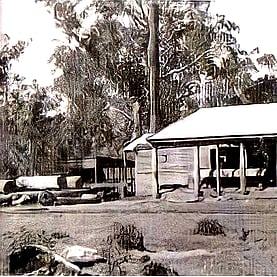
Wannerup Sawmill
A Hub of Forestry Innovation
By the early 1900s, the forests around Ludlow were entering a new phase. Timber was still essential to farms, towns, and industry across Western Australia, but attention was beginning to shift from simple extraction to longer-term planning. New questions were emerging — not only about how forests could be used, but how they could be sustained.
Ludlow became part of that change. Pine trials, plantation work, and later thinning programs helped turn the district into a place of experimentation as well as production. What happened here was not just about cutting timber. It was about learning how to grow, manage, use, and renew it.
Early mills in the region
Before Ludlow’s own milling operations developed, timber from this district was already being processed through regional mills, including the mill at Lockville near Wonnerup. These early operations relied on tramlines, rail, and steam power to move timber more quickly across the landscape and out to market. The lines that crossed the district were part of a much bigger story of industry, transport, and change.
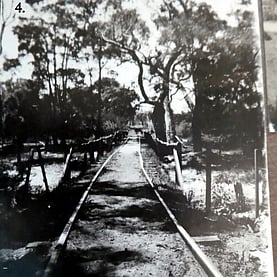
A timber tramline also ran from the adjacent Tuart forest toward the mill at Wonnerup, with a timber bridge built over the Ludlow River in about 1924 to carry the line. These practical structures linked forest, mill, and market in ways that shaped the district for decades.
Photo of Lockville/wonnerup mill Wonnerup Sawmill2519 busselton historical society enhanced by geoff
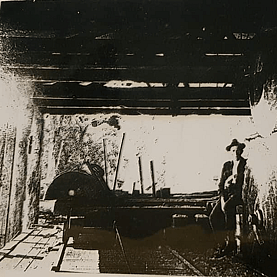
twin saws at wonnerup mill Battye Library 53132P
Tramline over Ludlow early 1900s - photo by John Watson
Ludlow River diversion - research and history by Bruce Taylor
LTFRG Ludlow River Diversion.pptx
Pine trials and the next step
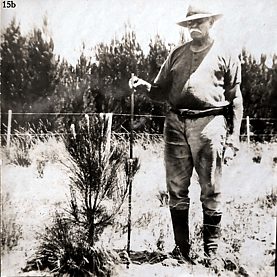
Ludlow’s importance grew as pine planting and plantation management expanded through the 1920s and 1930s. Trials at Ludlow helped test whether introduced pines could meet growing timber demand while easing pressure on native forests. As those plantations matured, the next challenge became clear: the trees needed thinning, and that smaller timber needed a practical use.
The first thinnings from the plantation were harvested in 1936/37. By the early 1940s, Ludlow-grown pine was large enough to be sent for processing into cases and crates, at a time when packaging timber for fresh and dried fruits and processed foods was in strong demand. What had begun as trial planting was now proving its value.
The Ludlow mill
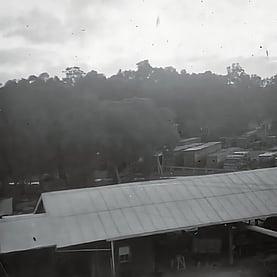
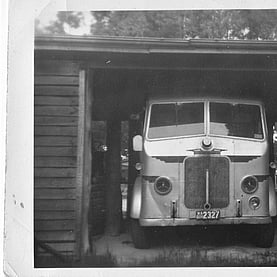
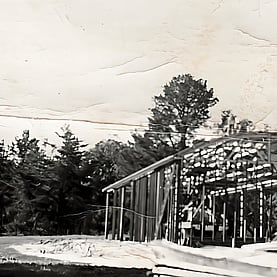
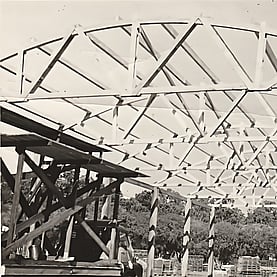
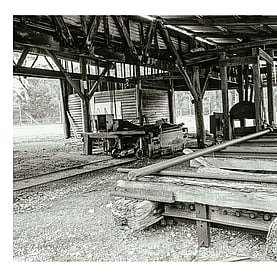
Ludlow’s growing role in forestry research and plantation management made it a logical place for local milling. Small pine mills were established in several plantations in 1950, including Ludlow. Between 1950 and 1954, construction at Ludlow included the mill shed, planing mill, garage and workshop, and timber storage shed. These buildings marked the shift from experimental forestry to an established working operation.
The mill processed pine, and later also handled Tuart for specific purposes. Heritage records note that the mill shed contained sawbenches, a cleating machine, a docker saw and a twin saw. Pine logs were milled, planed, and stacked for drying, while the larger twin saw was used for Tuart, including Tuart timber used mainly for railway rolling stock. In 1954, the Forests Department reported the sale of 134 loads of processed pine mouldings from the Ludlow processing plant.
This was more than a workplace. The Ludlow mill formed part of a wider system linking people, planting, thinning, milling, fire management, transport, and forest care. It was one piece of a much larger effort to build a more sustainable timber industry in Western Australia.
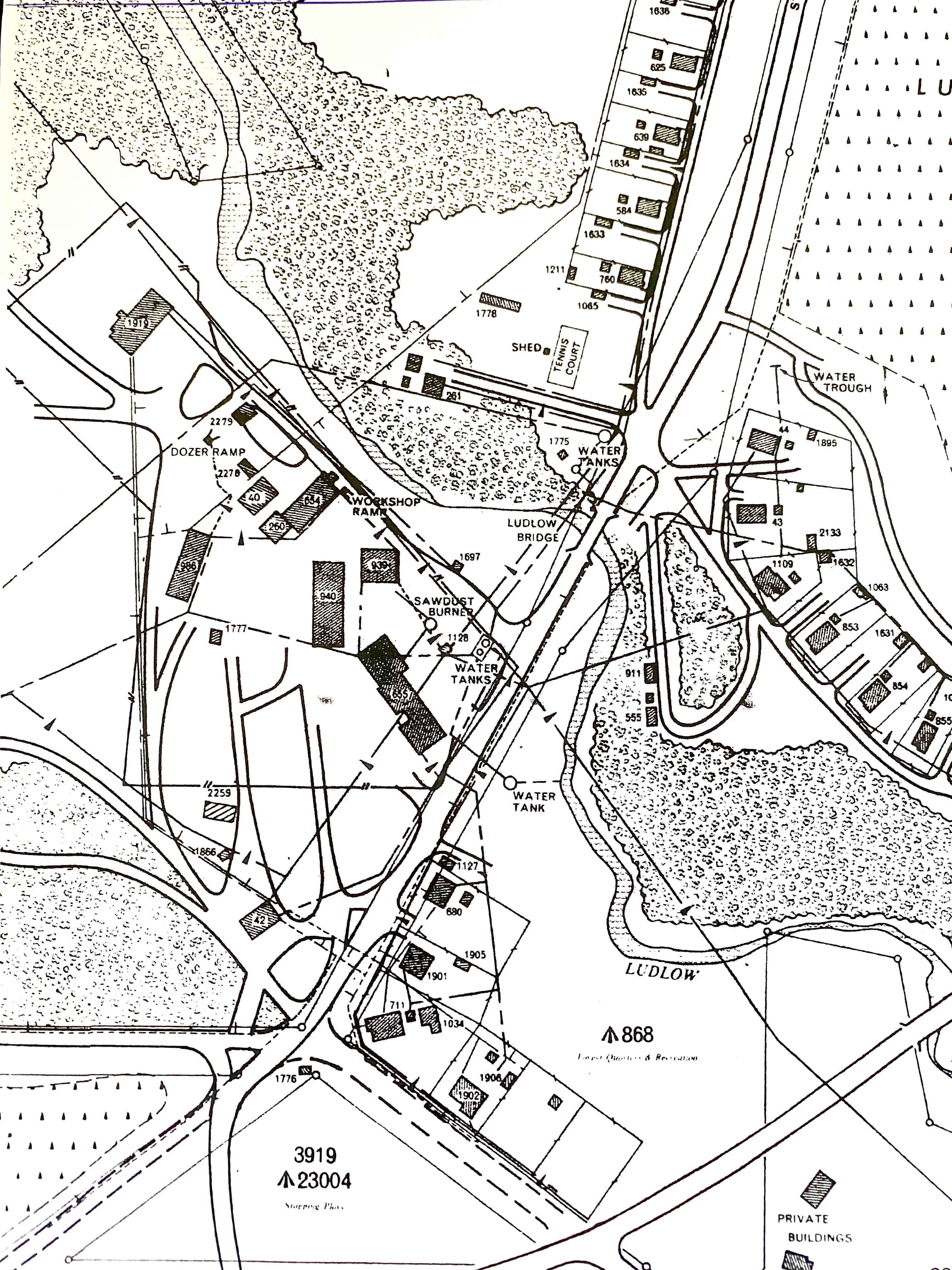
Ludlow Mill & Settlement sketch
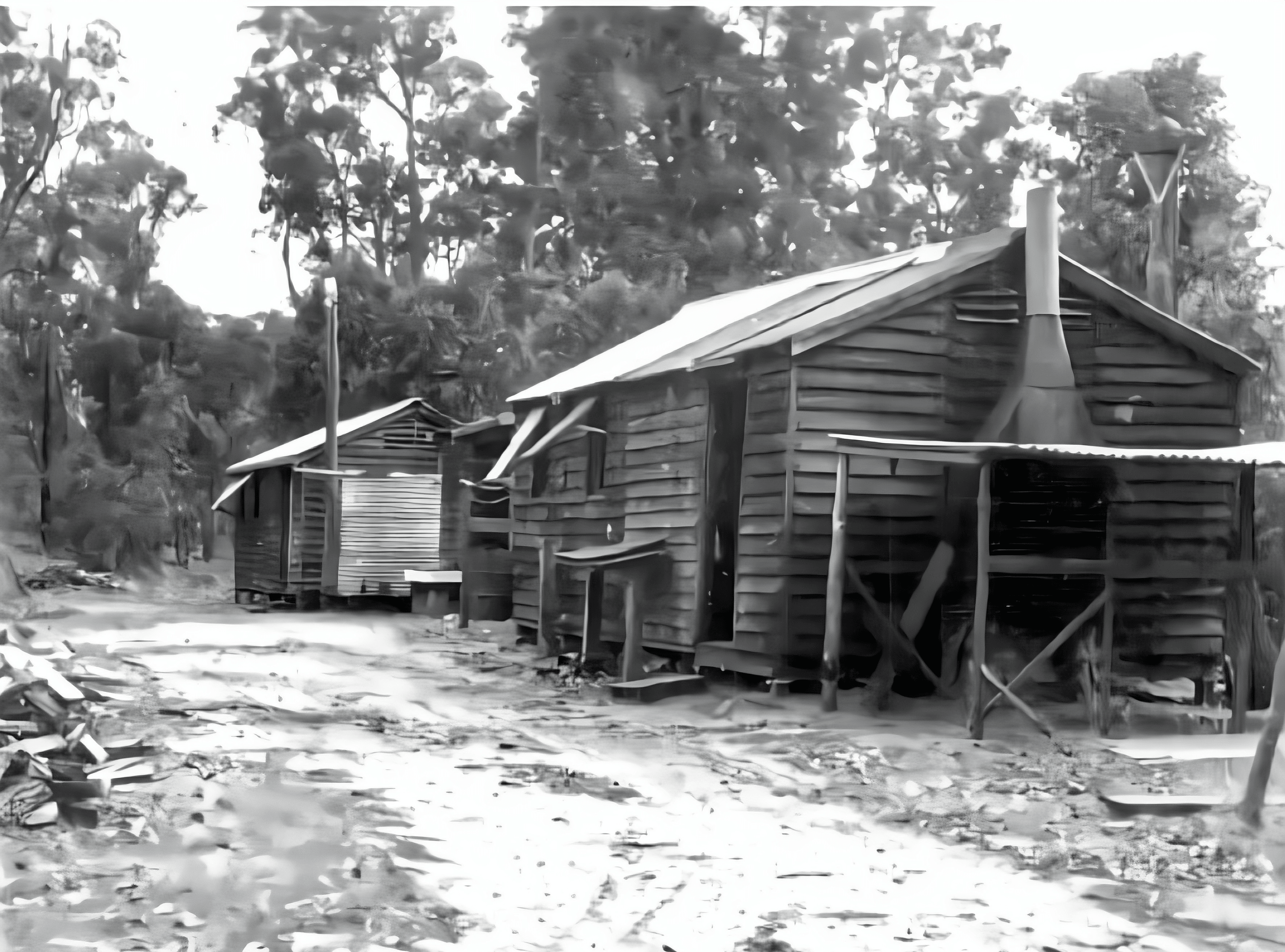
Single mens quarters
Closing
At Ludlow, forestry became more than taking timber from the land. It became a place where sustainable plantations were tested, practical solutions were built, and a different future for timber was beginning to take shape.